BREAKING: Conservative Party makes major concessions on immigration as leadership approves Executive Coalition

This story is breaking and will be updated.

A document obtained by The Model Telegraph reveals the Executive Coalition’s agreed ‘immigration proposal’. Tearing up the White Paper of last term, An immigration system after the European Union, the prospective government would ‘seek reciprocal free [movement]’ with ‘CANZUK and most rich EU nations.’ Also included is a commitment to ‘operate in full compliance with EFTA rules on internal immigration’.

This news comes in stark contrast to historic Conservative Policy of opposing Freedom of Movement. The climax of which occured during the Referendum of the Single Market.

The Conservative Party has confirmed the agreement has the support of leadership, also saying “the Conservative Party won’t be conducting a party vote.”

BREAKING: Executive Coalition agreement met as parties divide cabinet

This story is breaking and will be updated.

The Conservatives would take two Great Offices of State: The Office of Prime Minister and the Foreign Office. The Classical Liberals would claim the Treasury and the Liberal Democrats, the Home Office.

Altogether, the cabinet would contain 16 Conservatives, 10 Classical Liberals and 9 Liberal Democrats. This would mark a sharp decline in the influence of the Conservative Party, who boasted 22 cabinet ministers last term.

“We are extremely close to a deal”: Executive Coalition close to agreement as Labour remains confident of securing Number 10

On Monday the Conservative Party announced “negotiations to form a Conservative led government”, the so-called Executive Coalition joined by the Classical Liberals and Liberal Democrats, were underway. Named after the governing coalition in Northern Ireland, such a government would be short of a majority with 50 seats in the House of Commons, likely the motivation of achieving a “confidence and supply from the Irish Parliamentary Party”, with such negotiations also confirmed to be taking place.

This news comes as the Labour Party makes a bid to lead the 22nd government in concert with the Liberal Alliance and Social Democrats: The Sunrise+ Coalition.

A Classical Liberal spokesman confirmed “teams from the Conservative and Unionist Party, Classical Liberals and Liberal Democrats have met to discuss a possible coalition”, describing these negotiations as “productive”.

When approached for comment, the Labour Leader said, “I believe it would be wrong from me to comment on other parties’ matters”; before going on to say he “[remains] confident that Labour is fully able to form a centre-left government”.

An anonymous source close to negotiations told The Model Telegraph “we are extremely close to a deal”. Going further to say the agreement is “enjoying widespread support from [leadership]” and “it is clear the Conservatives are willing to move away from the politics of Blurple”.

Friedmanite19, the Leader of the Libertarian Party, reacted to this story by saying “it is of deep regret that the [Libertarians] will not form part of the next government and have been abandoned by the Conservatives…”. Describing the Liberal Alliance as “nearly [bringing] this country to the brink”, he went on to say of the coalition “I will reserve judgement for when I see the policies but I fear the Conservatives may have made too many concessions and have betrayed centre-right voters.”

I will reserve judgement for when I see the policies but I fear the Conservatives may have made too many concessions and have betrayed centre-right voters.

The Liberal Alliance will enjoy the leverage of kingmakers, able to choose between the Conservatives and Labour. The Model Telegraph understands the Liberal Alliance membership will vote between the two prospective agreements if negotiations are successful.

BREAKING: Sunrise+ talks ongoing as incomplete coalition agreement revealed

The verified document can be viewed here.

The Model Telegraph has been provided the incomplete coalition agreement between the Labour Party, Classical Liberals, Liberal Democrats and Social Democratic Party: The so-called Sunrise+ coalition.

The government would see Saunders16 of the Social Democratic Party take the position of Chancellor of the Exchequer with the party also occupying the Department for Energy and Climate Change.

The Labour Party would unsurprisingly take senior positions, including the office of Prime Minister and Secretary of State for the Home Department.

The Classical Liberals claim the Foreign Office and the Ministry for Exiting the European Union with the Liberal Democrats appearing to draw the short stick, securing the office of First Secretary of State and Secretary of State for Defence.

The provisional cabinet includes an incomplete ‘Policy Agenda’ including an ‘Iran Strategy’ of ‘No swap for swap of the tankers’. Also included was a commitment not to cancel the State Visit of President Donald Trump, ‘retain Free Movement of People with Europe’ and ‘expand… to NATO and Commonwealth nations with 3/4ths of UK GNI’.

Also revealing is a unagreed ‘commitment to NATO and Trident as a clear matter of Cabinet Collective Responsbility’ perhaps in reference to the Labour Leader’s historic opposition to nuclear weapons.

When approached for comment, the Leader of the Labour Party, Secretary_Salami refused to comment saying: “We deny to comment until after the results of the election have been announced”.

The Prime Minister responded to a request to comment by saying of the negotiations, “It’s a little premature isn’t it? Don’t count your chickens before they’re hatched”.

#GEXII: Conservatives set to remain largest party as Labour makes progress

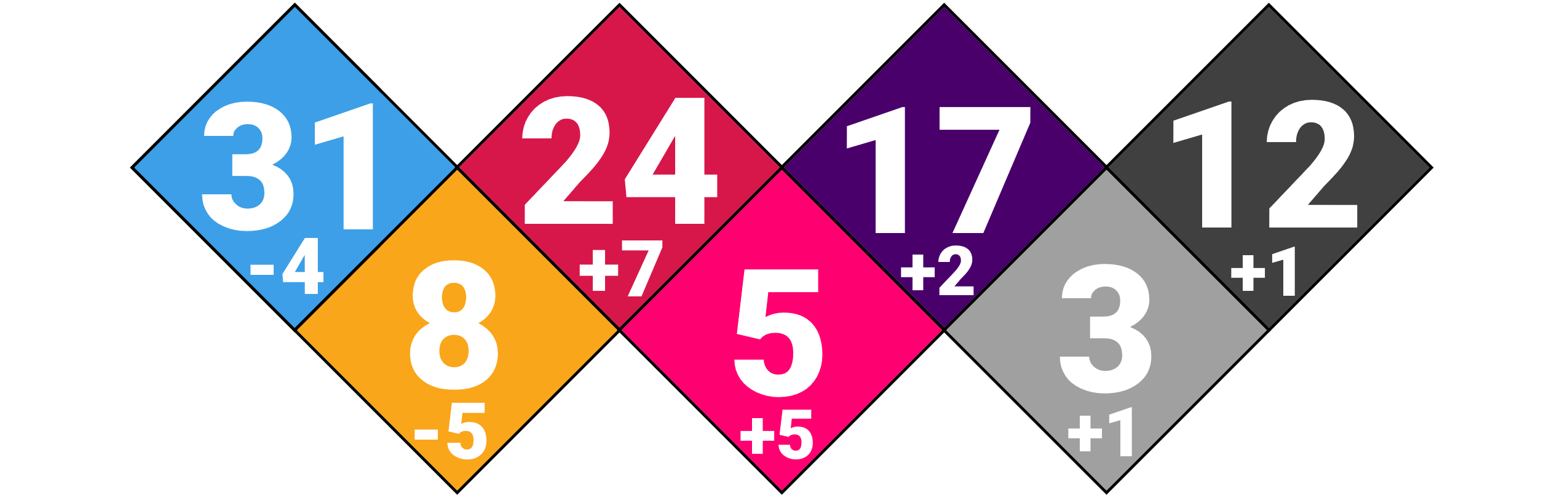
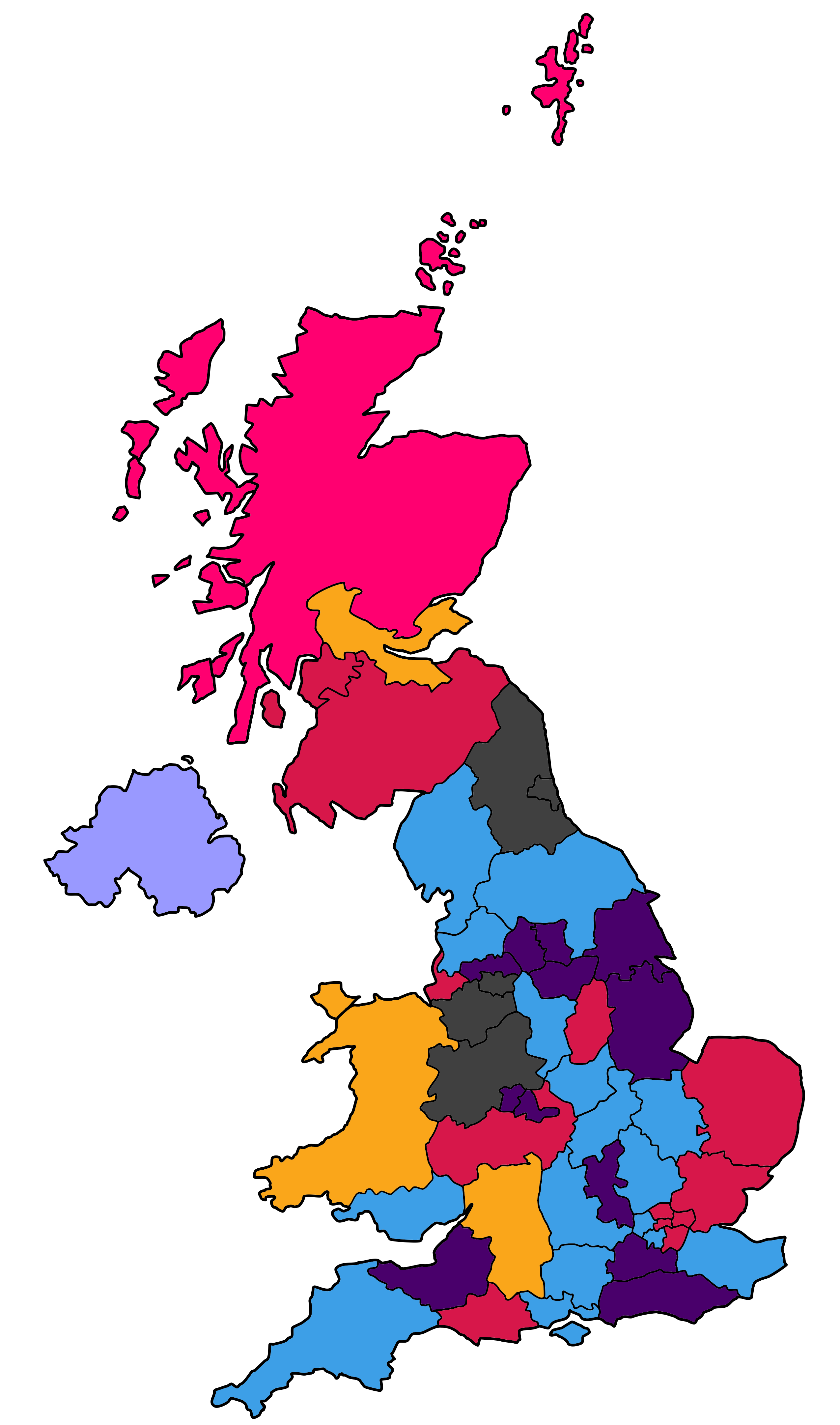
Despite suffering losses, a projection commissioned by The Model Telegraph predicts the Conservative Party will remain the largest contingent of the House of Commons, the Labour Party in a close second with the Libertarian Party, Classical Liberals and Social Democratic Party also with much to celebrate.

The Liberal Democrats and the Green Party are expected to have a difficult night, with the latter contesting electoral oblivion. In our projection, we expect the Greens to go home empty handed.

If on Sunday this projection is proven to be correct, the Government of the Conservatives and Libertarians would fall to 48 seats. The so-called Sunrise+ coalition comprising of the Labour Party, Classical Liberals, Liberal Democrats and SDP could rely on 49 seats and mount an effective challenge for Downing Street. In this theoretical House of Commons, “other” including Plaid Cymru, The People’s Movement and The Democratic Reformist Front may become influential in deciding the success of any government.

The full projection can be viewed here.

Where to watch

Highland and Grampian

The north of Scotland played host to a strong challenge from the Social Democratic Party and a relatively weak defence from a Conservative incumbent. Expect a large swing towards the challenger; although wether this will prove enough to dislodge a confortable lead in unclear.

North Yorkshire

Another Conservative incumbent in trouble, with a challenge lead by the Classcal Liberals; with endorsement from Labour and the Liberal Democrats. A strong campaign by both candidates could see a photo finish.

Birmingham, Solihull, and Coventry

With the absence of New Britain, and a Conservative no-show, the Liberal Democrats and Liberatarian Party will battle for this seat. Poor polling before the election and a weak national campaign could well see the Liberal Democrats unseated. Consider this seat a weather vane for a party hoping to stave off losses. Lose, and they should expect a poor night.

Derbyshire

A straight fight between the controversial Banana_Republic_ and a former Prime Minister. Expect a close result as Labour target this seat with a strong campaign. The Conservatives may hold with a equally strong defence and an endorsement from the Libertarian Party.

Bedfordshire and Hertfordshire

Another Conservative no-show puts what would be considered a safe seat well into contention, with in insurgent Liberal Democrat campaign, the Conservatives will be hoping their lead is enough in the face of a weak Liberal national campaign.

Essex

Another Conservative held seat, another challenge from the opposition. This time, a sam-irl Labour campaign with momentum. The Conservatives will mount a strong defence, but ultimately we expect vote splitting with the Libertarians and Classical Liberals to hand Labour the seat.

Glamorgan and Gwent

The Welsh Liberal Alliance should be worried in the face of strong campaigning from Labour, the Conservatives and Plaid Cymru. A four horse race. In a seat where anyone can win, the Conservatives and Labour seem the most likely to gain from a weakened Welsh Liberal Alliance.

“Press Ganged: Bad legislation restricts the freedom of journalists to publish”

NOM DE PLUME

“If reading is regulated, then music, conversation, every incident of social life must be regulated to”

Wrote John Milton in the poem Areopagitica in response to the Licensing Order of 1643, which instituted pre publication licensing in parliamentary England. Effectively recreating the tight state censorship system of the much reviled star chamber. It’s provisions allowed for the search, seizure and destruction of any books offensive to the government and the imprisonment of any offensive writers, printers and publishers.

In an age where opposition parties attempt to tightly restrict media ownership, and others condemn the free press, Miltons warning bears repeating. The media is fallible, we saw its guts laid bare during the Leveson Enquiry but without a strong tradition of investigative journalism we lose an integral part of a free society.

Alas press freedom in Britain is not what it should be, ranked 33rd in the World Press Freedom Index we are behind many other Western European Nations. One major contributing factor to this is the risk to the financial position of newspapers, the Crime and Courts Act 2013 would require a newspaper that declined to join a state backed regulator to pay both sides costs in privacy and defamation cases regardless of the facts of the case.

It’s damaging effect is to deter quality reporting for fear of what reminiscent of the Licensing Order of 1643 a completely arbitrary punishment for journalistic expression. It is therefore gratifying that the government have seized the issue by the nettle and taken steps to remove the condition from statue and do away with the arbitrary financial penalties on investigative journalism by submitting the Crime and Courts amendment bill. It may be a small step but it will go along way to boosting the financial strength of newspapers and their ability to report on those in positions of power.

META: This article was written by Nom de Plume (LeChevalierMal-Fait) for the Telegraph separate to his canon character.

Court case launched at Government over Votes at 16

The Baron of Alton, JellyCow99, Shadow Chancellor, has launched a Supreme Court Case against the Minister for the Cabinet Office model-pjr over the Government’s voting age policy.

The case claims that the Government is breaking its obligations under the European Convention on Human Rights (ECHR) and the Equality Act, implying that the Government’s “Raise the age” policy is ageist.

The cited protocol under the ECHR states that “The High Contracting Parties undertake to hold free elections at reasonable intervals by secret ballot, under conditions which will ensure the free expression of the opinion of the people in the choice of the legislature,” which basically means that the United Kingdom is obliged to hold regular and free elections to its legislature and that ballots should be secret.

The Equality Act, which was passed in October 2010, outlaws discrimination, harassment or victimisation, and as users of private and public services based on age. However, it makes no direct reference to voter enfranchisement (after all, before 2016, the voting age was 18).

The logic behind the case seems to be that stopping under 18s from voting is discriminatory towards minors and would fall under age discrimination from the government. Following on from such logic, it can be assumed that the current voting age of 16 years old would also be deemed illegal under the current law, or any “minimum voting age”.

Lord Alton launched the case yesterday.

Lord Alton said he believed that the government “[has not worked] within the confines our own law and the law it follows internationally” and that he is “following the correct procedure to determine whether or not [the Representation of the People Bill] is in breach of either the ECHR or the Equality Act 2010”.

Responding to a question asked by The Telegraph about whether he would favour universal suffrage (in that persons of all ages would be allowed to vote) he said “No, and that is not the basis of the court case. The case is based solely around preventing illegal disenfranchisement.” This seems to go against the earlier logic, as not calling for universal enfranchisement would seem to go against the idea that having a voting age, be it at 18 or 16, is age discrimination, or infringing on human rights.

If this case were to win, it could set a dangerous precedent surrounding what is considered age discrimination, after all, there are many other things that have age limits, such as the drinking age (18), the legal driving age (17), films (12, 15, 18). Minors are also protected in many aspects. Under 13s can’t use sites like Facebook and Twitter or get a part-time job. If the court were to rule in favour of Lord Alton, this may set a precedent that the above could be ruled as age discrimination by the court.

All in all, it would seem that this is another bump in the Opposition’s backlash against so-called “Gregfest”, the Government’s wide-reaching reforms, all introduced by ggeogg, the Earl of Earl’s Court, and former Conservative member for Lincolnshire, which culminated in a series of protests against the lowering of the voting age in Manchester and London on the 2nd of May.

The Earl’s bill seeks to raise the age required to vote from 16 after it was lowered by the Liberal Democrats in 2016, which would make it the first country in the world to raise, rather than lower its voting age. The bill, now in the Lords, nevertheless passed the Commons by 3 votes, just 3 days after the National Day of Protest took place, making it

For now, it remains to be seen what will be the outcome of this case and the government’s response to it.

Temple talks party politics and devolved elections

Former Sussex MP, I speak with the Baron of Carrickfergus, LPUK member and Telegraph columnist.

On a brisk Wednesday Lunchtime, I flew out to Northern Ireland to visit ex-DUP leader turned Libertarian, Henry J. Temple. We met in a small café in Belfast, where he ordered a latte.

First, I asked him about his frequent political turn coating. The former MP for Sussex was originally a member of the NUP, where he was leader of the DUP for a period of time, then moved to the Ulster Unionist Party, which is a branch of the Conservatives. After being suspended from there, he moved on to the Libertarian, achieving a shock win in last year’s Sussex by election. Recently, however, he left the LPUK to work once again in his beloved Northern Ireland, however that was short-lived, as he was let back into his old party by Friedmanite, seemingly with few questions asked.

Temple justifies this turn coating, which may deter some voters from choosing him in future elections, should the peer decide to run for democratic office once again, by saying “I’m something of an outspoken member of the political landscape” – perhaps a politician’s way of recognising his own controversiality – but that he is “proud” of not “doing what is popular”, but “doing what one thinks is right.”

He originally joined the former Nationalist Party because of their strong policies that he thought would “help the nation” but moved to the Conservatives because of their inability to oust homophobia within the party. However, Temple is known for being quite a demonstrative politician, and the Tories disliked his links to the Orange Order, marching in it while in the UUP.

His move to the LPUK was spurred because he “agreed with their economic approach” and the party’s less restrictive nature allowed him to “make [his] voice heard.” His recent move to the Loyalist League was caused by his wanting to “focus on Northern Ireland”, however he found that the true focus was in fact on the Lords, so he quickly returned to the “move active” and more enjoyable LPUK (not the first Loyalist to make such a move).

The move may surprise some however, the former NUP and the Libertarian Party are not known for being that aligned. The LPUK’s libertarian free market stance is quite in opposition to the NUP’s view, which might be called “nanny-statist” by the Deputy Prime Minister. Temple describes himself as a conservative and a libertarian, despite recognising that the views are quite incompatible in areas. He said that he thought “of the individual should be advanced as often as is possible. However – the Government does have a role in the enforcement of the rule of just law, and to ensuring that those born into situations in which they are disadvantaged, receive the equality of opportunity to which I think they are entitled.”

Nevertheless, he admitted he felt the LPUK was the best party for his views, begging the question of the motive for the move in the first place. This is further questioned as he said they “support and care about Northern Ireland.” Although he thinks “they lacked the resources and membership to take on the UUP,” which is dubious considering the minor partner in the Government has both a larger base and more resources to fight an election than the Loyalists.

Temple, who has long been active in Ulster politics, said he is “supporting the LPUK across all of the devolved nations”, explaining that he thought the aim for the Northern Irish wing of the party, which has so far failed to make much gain in the province, is to take on Northern Ireland’s major party, the UUP, owned by the Conservatives, and whose former leader is now the Prime Minister, despite the close bond between the LPUK and UUP on a national level, because the UUP has become “complacent”, possibly evidenced by the governing party’s low turnout.

Temple has said he is on the list of candidates in the devolved elections, which are to take place next month. In all he said he plans to “stay in the Lords” and doesn’t care if he’s “unpopular”, as long as all sides of the House are held to account.

You can read the full interview here, including questions about religion, democracy and political extremism.

HJT Interview

Telegraph: Ok. So, Henry, you have had quite a turbulent political history. Originally a member of the NUP, you became a controversial member of the UUP and then a Libertarian, during which time you made your political chef d’œuvre at Sussex some would say. Then recently you left the LPUK to lead the DUP, and now you’ve returned to the LPUK again. Why all the turn coating?

HenryJohnTemple: It’s no secret that I’m something of an outspoken member of the political landscape, and that’s something I am proud of. For me politics is not about doing what is popular, it’s about doing what one thinks to be right. It’s what drives me, and what continues to drive me. When I joined the NUP they had strong policies that I believed would help the nation – but they happened to be a little to (sic) slow on ousting homophobic people within the party. I left for that reason. From the UUP I was suspended. They took objection to be marching with the Orange Order, something David Trimble, a winner of the Nobel Prize and stalwart UUP member before its current form, did also. So I went to the LPUK. Why? Because I agreed with their economic approach, and they gave me the room I needed to make my voice heard. I left the LPUK to focus on Northern Ireland within the DUP, however the focus of the league was on the upper house, which I was warned of before I joined, so my return to the LPUK was once born of a desire to return to a group that I greatly enjoyed being part of, and that was more active than the League.

Do you feel as though the LPUK don’t care about Northern Ireland?

No. I know they support and care about Northern Ireland deeply, they just lacked the resources and membership to take on the UUP for the Unionist Voteshare (sic) at assembly level.

So, would you consider it the LPUK’s goal in Northern Ireland to “take on” the UUP?

I would yes. I think the UUPs majority, which has not shifted much in the past few elections, has made them grow complacent. Would you consider the UUP to be as active as they should be?

I’d rather remain unbiased on the issue myself.

Moving on – the Loyalist League and the LPUK are very different parties. One stands for small-c social conservatism and traditionalism (and possibly what the Deputy Prime Minister would call ‘the Nanny State’) while the other stands for libertarianism. How would you describe your political stance?

I would describe myself as a conservative, and a Libertarian. But do he sure to publish that with a lower case ‘c’! I think the Government should be small, and liberty of the individual should be advanced as often as is possible. However – the Government does have a role in the enforcement of the rule of just law, and to ensuring that those born into situations in which they are disadvantaged, receive the equality of opportunity to which I think they are entitled.

So, you wouldn’t see any conflict between the views of conservatives and libertarians?

That’s a very broad question, so forgive me – I’ll give it a broad answer. Yes, there are conflicts between the views, because they’re different belief systems.

Do you think you’re in the best party for your views now, however?

Yes.

So, recently you gained a working peerage as the Baron of Carrickfergus. Do you see a return to the Commons in your future or will you be remaining in the Upper House? Any plans in your beloved Northern Ireland, or one of the other devolved nations?

I greatly enjoy the Upper House, assisting in the passage of legislation, and posing questions on the less thought through topics is a passion of mine. At present, I’m supporting the LPUK across all of the devolved nations. (sic)

Are you planning a run in the devo elections?

The LPUK is yes, and I am on the list of candidates.

So, it’s no hidden secret that you are a religious man, probably politics’ current greatest proponent for the Church of England. How do you think your faith influences your politics, would you like to see the remarriage of Church and state?

I think Morality does yes, it’s up to the individual to chose (sic) where that morality stems from. For many the easy choice is the Church, so perhaps the church should be remarried to the state – however the easy choice is not always the correct one is it? I think we need to refund our morals at a deeper level than at present, and an understanding of faith can help that

So, if another Desecularisation Bill were to be introduced would you be in favour of it?

Could you clarify the specifics of what such a bill would propose?

repealing the secularistation act

https://www.reddit.com/r/MHOC/comments/9ombw2/b700_secularisation_repeal_bill_2018_second/ (e.g.)

I would support the repeal if it accommodated for other faiths.

Another thing – Over time you have also called for the Lords to have more authority than they do now. Do you not see this as undemocratic?

If one defines democracy as rule of the people and by the people, then the system in which we currently live is deeply flawed already. So yes, I would say that in a basic sense, it would be viewed as undemocratic. But, one of the attractions of Democracy is the protection from the rule of tyranny by majority. So in a system in which the majority are increasingly having a say at the detriment of the minority, a system that protects the rule of law and the minority within it, is surely a good thing?

Some people would go as far to call your brand of politics “extremist”, would you agree with them?

All politics are extreme from certain points of view, so for some people yes, I am extreme.

Do you see yourself as extreme compared to the political norm?

No.

Finally, when the LPUK joined the Conservatives in the last government, you were a notable exception in Leafy’s last cabinet. Why do you think this is? Can you be trusted?

The Conservatives run a right ship, (sic) I don’t think that my vocal ways when it comes to things I disagree with go hand in hand with cabinet collective responsibility.

So, what’s next for HenryJohnTemple?

For me, I’m looking to stay in the Lords, and ultimately – to stay asking questions, of this Government, and all sides of the House – to matter how unpopular those questions may be.

Climate Change Secretary takes questions from the House

As part of a statement to the house by the Secretary of State for Energy & Climate Change (ECC), he has also taken questions from MPs on the government’s Paris committments.

In a statement a few days ago, InfernoPlato, ex-prime minister and now ECC, outlined how the government has attempted to reach the UK’s committments to the Paris agreement, signed in 2015.

The Minister said that the government was planning a “Climate Change Bill”, which would inculde a Carbon Levy, something the Classical Liberals attempted to introduce at the start of the term, but was voted down by Government MPs.

The bill, he said, would aim to:

  • require the Secretary to detail how to government is implementing its 2015 commitments
  • close all coal power plants in 10 years (accelerated to 5 years)
  • invest in renewables and end fossil fuel subsidies
  • introduce a carbon levy

He also cited the government’s Agriculture Sustainability Strategy, worked on with the Environment Secretary (ex-Conservative antier, at the time) and the rise in the 2050 renewable energy target to 99%.

InfernoPlato has also come under fire from the opposition recently for failing to attend his Minister’s Questions last week, after the Prime Minister earlier committed that all members of cabinet will be required to answer more than half of the questions, or face losing their job. The Secretary responded to the questions that he missed in this statement too.

At the end of his statement, the minister announced his resignation, citing his inability to attend MQs due to personal reasons.

Earlier this week, the Government replaced InfernoPlato with another former Prime Minister, the recently retired Leafy_Emerald.

DF44, former Prime Minister, who now leads the Climate Rebellion faction of the Green Left Movement, responded to a question from The Daily Telegraph, saying

I can outright confirm that InfernoPlato contacted me on the matter of the Climate Change Bill – a point on which I have to imagine the recent fracking motion from the oppositon might have benefitted from! Whilst I still don’t think that the bill goes far enough in many areas, it was a proper step in the right direction, rather than a token shuffle that we have often seen be promptly walked back with interest. When it comes around it is likely that I will vote for it, but I am conscious that it is not a solution, and I will continue to ensure that the Government is held to account on climate change, without using a fig leaf as a shield.

It is highly unfortunate, and I cannot quite believe I am saying this after the period I was Prime Minister in, that InfernoPlato is resigning. The Government has failed one of their harder working ministers by failing to seek a substitute to a Minister’s Questions. I’m aware that I cannot complain too highly – I was also unable to attend due to work co-ordinating climate action protests including upcoming School Strikes – but the Government I’m sure has plenty of Junior Ministers who could’ve stepped to the plate to provide accountability for the department at the time.

On the matter of Leafy as the new appointment, if what I have heard is accurate, is that I hardly view his Government as one with a green legacy. If he wishes to match his predecessor, then he has a heck of a challenge, likely starting with him returning to the debating chamber and making a proper comment to the house for the first time since the General Election. Until we start seeing that, I fear the Government has replaced the active with the inactive, all in the name of improving activity.

DF44

HKNorman, the Shadow Climate Change Secretary to whose questions InfernoPlato didn’t respond during MQs, said the following:

I’m glad he has resigned as the Secretary of State, because he has a pretty dismal record in the position. His statement, while informative, does not make up for his missing MQs, as I had a whole array of questions planned as follow ups to whatever answers he may have had, so there is a definite lack of accountability there, so it is right that he has resigned.

I think Leafy is an interesting choice for the role. It could bring a lot of new ideas to the role, but that said we can’t really call pin many hopes on him to make any real effort to fight climate change, as the Conservative record speaks for itself. Labour is proud to have joined the Greens and Climate Rebellion in advocating for a Green New Deal, which we have made the heart of our agenda for office.

HKNorman, Shadow ECC
Design a site like this with WordPress.com
Get started