Trouble in paradise – A telegraph editorial on the issue of Chagos Islands

Diego Garcia - Wikipedia

Written by Harry Johnson

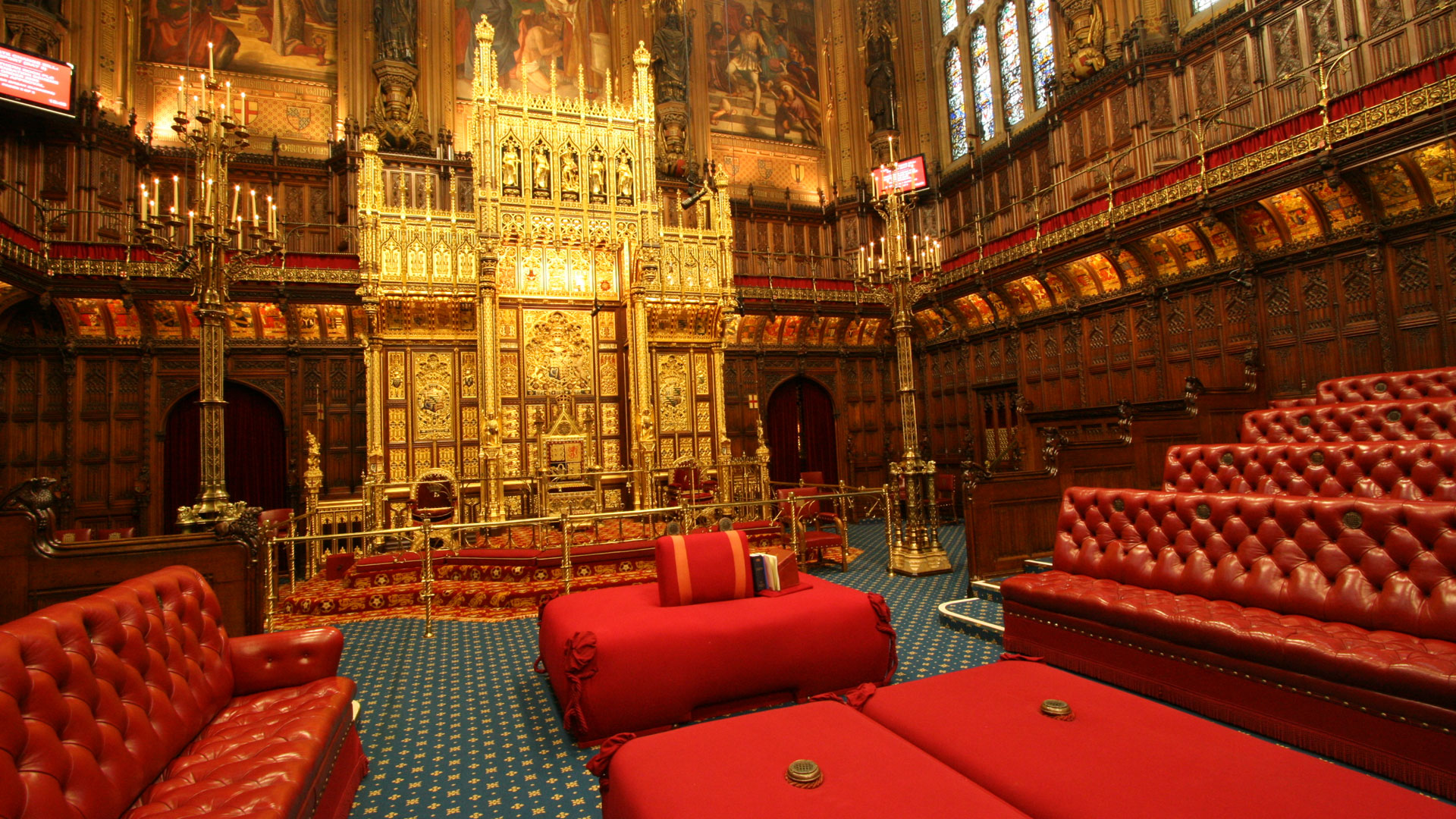
A while back the House of Commons deliberated upon a motion to withdraw from the contested Chagos Archipelago and to help enable Chagossians to resettle the islands. During the debate many good arguments have been put forward by members of Government as to the feasibility of resettlement and concerns over the joint US-UK  military base. Chief of the arguments being made against the continued existence of the BIOT was the ICJ judgement and concerns over human rights abuses carried out when the Chagossians were evicted from the islands.

The former of the arguments arguably does carry weight, especially in the light of the decision being rendered by the ICJ itself and ultimately is based on sound legal reasoning. As our delegation to the UN has noted however there exist several issues with the judgement. First of all the judgement is purely advisory and thus it has no legal power to compel us to withdraw from the islands. Furthermore as the UK has  argued before the ICJ itself the issue of the BIOT is ultimately a bilateral dispute that as per precedent regarding international law ought to be solved and arbitrated with the consent of both sides. Consent, which we as a state have failed to provide.  To allow for such to disputes to be resolved on a unilateral manner is extremely dangerous.

Perhaps this quagmire is best described by the British ambassador’s to the UN remarks “This has wider and profound implications for all Member States with bilateral disputes and if the resolution is passed, it will create a difficult precedent in the General Assembly. It would imply that any bilateral dispute between two States could be referred for an advisory opinion to the ICJ and then pronounced on by the General Assembly, whether or not the States involved have consented. I invite colleagues to reflect carefully on that point. If today you are a country which has a bilateral dispute with another Member State, you risk throwing open the door for that dispute to be subject to an advisory opinion of the ICJ and a vote of the General Assembly.”

It is also worth noting that successive British governments have taken steps in order to ease the integration of Chagossians into the Seychelles and Mauritius by offering generous support packages totalling tens of millions of pounds including several payments to Mauritius itself. Moreover as per the agreement signed between the Mauritian and British governments Mauritius maintains access to certain aspects of the BIOT such as certain natural resources there. With all these facts in mind it seems that the argument against our supposed “occupation” becomes quite flimsy , especially in light of Solidarity’s other more isolationist policies such as the declaration of genocide in Canada or tacit support for the BDS movement.

Even if we were to concede that the occupation itself is illegal or perhaps more accurately immoral in the view of the UN the original ruling called for us to withdraw as soon as possible. Given the precarious position  we are in in the Indian Ocean any sort of withdrawal from the Islands is simply not possible without finding a replacement for the base without some other facility to replace it. However no such replacement exists. When pressed about this, Solidarity has proposed to use facilities in Kenya and Sierra Leone. The only problem being is that neither of these nations hosts facilities remotely similar to what Diego Garcia has  and both countries are thousands of kilometers away from the Indian Ocean Territory.

The Diego Garcia Naval Support base is  also uniquely positioned. It is practically situated  in  the center of the Indian Ocean, within striking distance of virtually all maritime choke points, key supply lines, and hostile naval facilities. It’s also worth noting that in the worst case scenario such as a protracted war between the UK or US  and China returning to bases in the Middle East would be tricky at best and dangerous at worst as not only would these ships have to travel for thousands of miles, but they would also have to pass through the strait of Hormuz, which could be blocked by the Iranian military, leaving the bases in Singapore as the alternative although Chinese ships operating out of Sri lanka could potentially force British and American ships to travel around Indonesia to reach that base. Therefore the choice seems quite clear either we are to abandon the Indian Ocean or the base in Diego Garcia has to stay for the foreseeable future.

Source GIS

Furthermore so long as the base remains under British sovereignty the base is also a much better geopolitical bet than a base in Mauritius or India, owing to the continuous Anglo-American alliance “the special relationship” that is only set to improve after our withdrawal from the European Union.  Political reliability is key when it comes to critical overseas bases and the current Diego Garcia lease arrangement between Britain and our allies across the pond is arguably the most politically reliable way to house American troops in the area. 

Another concern is that leaving the base entirely would also remove an emergency landing site for civilian aviation over the Indian Ocean as well as potentially impair future search rescue operations within the Ocean as was the case with the Malaysia Airlines Flight 370.

What is more, the facilities present on the Island such as the giant airstrip of over 2 miles, climate-controlled hangars for stealth bombers such as B-2 Spirit bombers and a range  of other naval support facilities is not something that can be easily replicated elsewhere. Not without major costs and mass evictions at least. For instance, the total area of Diego Garcia is 12 square miles, almost 3 times the total area of the Sembawang area surrounding the British Defence Support unit in Singapore home to over 95 thousand people. If Solidarity wishes to replace BIOT with this base they would be looking at not expelling some 1400 people as was the case with the Chagos Islands ,but anywhere in excess of 95 thousand people just to get a third of the area Diego Garcia  currently offers.  The same would be true for any feasible replacement. There simply is no other base like Diego Garcia within a reasonable distance from the  hot spot that is the Indian Ocean , unless one would be willing to either colonise another island or evict tenths of thousands of people from their homes to ….. make up for evicting thousands of people from their homes.

Even if the United Kingdom government  was to foolishly embrace the advice of Solidarity and chuck the archipelago in favour of some unspecified base in the Middle East or Asia. There is still the tiny issue of nukes and other elements of the US nuclear triad being present within such a base. 

Glossing over loopholes or other “exemptions” within these treaties and laws since Solidarity has put international law as the overriding reason for their BIOT policy and therefore it would be hypocritical to try and work around these international treaties. Putting  nuclear weapons in any of the zones covered by any of these treaties would breach international law the party so seeks to protect so much.  So bases in Africa and chunks of  Asia  are out of the equation ,including a Mauritius-controlled Chagos archipelago ,unless international laws are to be breached or seriously challenged.

One could also speculate as to whether other states within the region such as Oman or Qatar would wish to have nuclear weapons deployed within their borders. Even if consent was somehow provided the strategic value of these weapons and equipment  would be significantly diminished as they would be relocated from the center of the Indian Ocean to the Middle East , where they would have to potentially travel much longer distances through  potentially hostile states such as Iran or Russia ,risking interdiction or worse an international incident.

Most humorous however is the claim that the utility of the Chagos islands would be “questionable”  when it comes to assisting India. To quote an excellent article by retired Rear Admiral   Micheal McDevitt “ The base has its origins in the 1960s as decolonization swept over the region and Soviet influence grew in many of the newly independent countries. But it was China, not the Soviet Union, that spurred Washington to focus on acquiring a base. The policy trigger was the 1962 Sino-Indian War, when Prime Minister Jawaharlal Nehru had pressed Washington for military assistance to India, including an urgent request for U.S. air power to actually intervene. President Kennedy was not willing to go that far, and decided to dispatch the U.S. aircraft carrier USS Kitty Hawk to provide air support if China drove south to Calcutta — but a ceasefire was reached before it arrived.” The entire point of establishing a base at the time was to ensure that power could be projected within the Indian Ocean and that includes the ability to provide support to India should things go south.

National Security and power projection should never be treated as partisan issues. Regardless of one’s views on economic and social issues it is absolutely crucial that politicians do not try to undermine our strategic capabilities just to score points against their opponents.

Sources cited: 

https://www.gov.uk/government/speeches/resolution-on-the-british-indian-ocean-territory

The cracks are starting to show – opinion

Cracked Rose by kmecreations on DeviantArt

Written by Harry Johnson , Telegraph Editor

Cohesion is a key aspect of every party no matter its ideology or size. If a party is unable to remain unified on at least the most basic of policies then it ceases to be an effective political  force just like an army without discipline ceases to be an effective fighting force. We have seen that happen when the original Liberal Party was tearing itself apart , making way for Labour to become the main progressive force in Britain. Quite ironically it seems that Labour may just suffer the same fate as their former rivals under Lloyd George.

Only weeks ago we have seen Labour’s leftmost faction  including high-profile Shadow Cabinet members break with the party altogether to form the socialist Solidarity party as well as a shadow cabinet member joining the more centrist Coalition! Party. These things alone ought to spell trouble for a party that has been thrown out of second place in terms of seats. After such a situation one would expect Labour to at least partly bounce back from it’s historical lows. However no such thing occurred as Labour has seen its predicted vote share fall yet again from around 20% to 15.65% , putting them in neck with the LibDems for third place.

The total decimation in national polling is accompanied by a slump in constituency polling with the Telegraph projecting approximately 13% of support for the Labour Party across 6 key constituencies, with the LibDems and Solidarity feasting on what little support remains from the party’s disparate factions. Against this backdrop Labour’s leadership attempted   a comeback that ultimately ended up backfiring immensely as Labour found itself attempting to amend repealed bills and pushing for a disastrous 55% increase in minimum wage , which you can read about here. At any rate the legislative repertoire of the left-wing party seems more like a sloppy Waltz than a well-rehearsed ballet.  

This is where the cracks truly show themselves as upon the commencement of the debate on Labour’s bill to abolish the House of Lords altogether several Labour MPs including the Chief Whip have publicly voiced their displeasure , when publicly confronted about it they have admitted that Labour is yet to set a whip on an official Opposition bill authored by the Leader of the opposition themselves. It is also worth noting that throughout all this mayhem the  Chief Whip put  the blame squarely on the leader of the Opposition claiming that they had no say in the process of approving the bill and that within the Labour Party Chief Whip is not a leadership role. Both of these facts are particularly striking as it is the job of the chief whip to ensure that the party can maintain a united front against an overwhelmingly popular and unapologetically right-wing Blurple government. By effectively cutting out the Chief Whip from the equation Labour leadership not only makes it much more difficult to have their whips be enforced but also creates a strange dynamic between the whips and leadership where leadership controls the party policies and the chief whip irrespective of their objections has to enforce them, resulting in situations where the Chief Whip is the one breaking the whip they are to enforce.

More worryingly for Labour voters however it is becoming harder and harder to work out where the party and its MPs really stand on many basic issues. Going into last election we have seen Labour run on a platform of drastic deficit spending and free trade only to see that policy be rectified when Labour voted to make substantial changes to the CBTA tariff schedule as per the Motion on Tariff policy. It is worth noting that both the original CBTA that lowered tariffs and M525 were both almost unanimously supported by the Labour Party. 

There also lies the issue of Labour on taxation and economic strategy . The traditional wisdom would be that Labour stands for higher spending and consequently higher taxation. Yet quite recently a Labour MP voted for a motion that called increases in income, VAT, and carbon taxes “detrimental to families, pensioners, and businesses, and is not in the best interest of the United Kingdom.”. Perhaps this could have been due to miscommunication or simple human error, but this supposed change of heart was later re-affirmed when the Shadow EPW Secretary openly said that they are not socialist. This is in contrast to the official party line that Labour is  a socialist party.

Regardless of whether Labour considers itself to be socialist or capitalist, it is abundantly clear that in its current state it needs to take action before the cracks in the party sink it to the bottom.

“I felt I could make a difference. “ – an interview with ThreeCommas

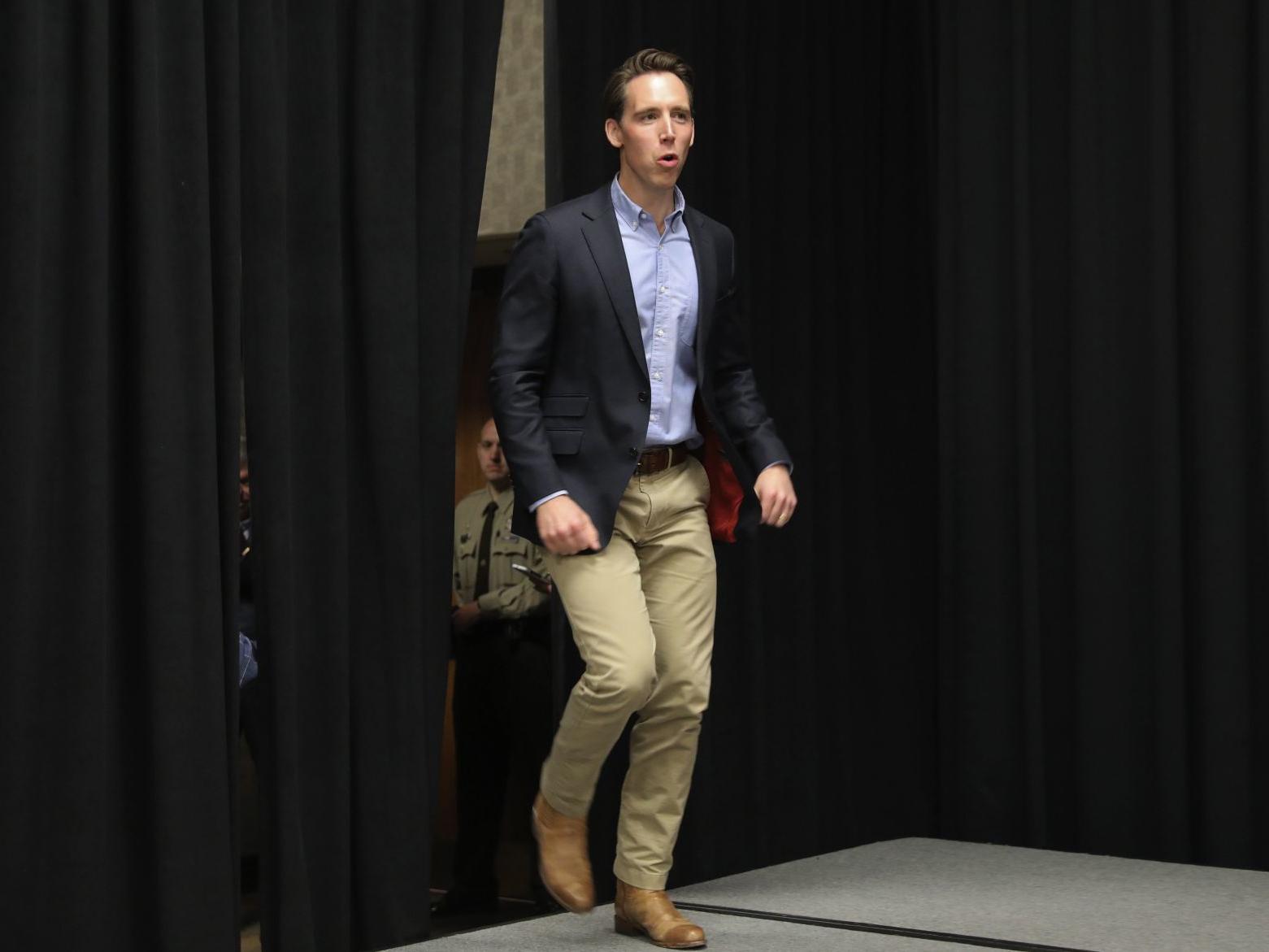
Photos: Missouri Attorney General Josh Hawley campaigns for U.S. Senate  seat | Politics | stltoday.com

In an exclusive interview with the Telegraph, the LPUK’s newest Deputy Leader has dived into the issues that matter to him and on his future plans for politics . Up first was the rather obvious question of what made him join the libertarians in the first place

What made you join the LPUK in the first place?

Growing up in Manchester I always had a keen interest in politics because of how they affected my family and the people around me. I always felt that to truly benefit the people a government should cut red tape, keep taxes low, and focus on the issues that matter most to the people. These values aligned greatly with the LPUK and once I joined the party I felt right at home with the wonderful people inside the party. Before my election to be MP for Manchester, the seat had long been held by parties on the left-most notably the Green Party. I know that people were feeling let down by the Greens and parties on the left in my home town and I felt I could make a difference. That’s what led me to lead a grassroots Libertarian campaign in Manchester.

Where on the political spectrum would you place yourself?

I’m not the biggest fan of the political spectrum because I believe it tends to divide people and make politicians become entrenched in their views rather than try and reach bipartisan solutions. At the end of the day, we have so much in common rather than what may divide us politically or ideologically. That being set I am most aligned with a Libertarian Individualist mindset. I want a small government that emphasizes individual freedom through its policies.

What made you run for the Deputy Leadership of the LPUK? Was this your first attempt?

This wasn’t my first race for DL, I ran once before and lost a close race. I think that race helped prepare me for this one and people had more confidence in me as a result of that. What made me run is that I believed I could help the party write a new chapter in our history. So far we have always been in opposition or a junior partner in government but I think as the nation realizes the two-party system has failed them they will support the LPUK. As DL I wanted to lead the party there and I was able to win the support of my fellow party members who believed in me as well.

Where do you see yourself in the next 10-20 years given your rather quick rise in politics?

I entered politics because I wanted to make a difference for my home and help the country find its direction. I’ll continue that fight for progress as DL and certainly as long as I am an MP. That being said politics not an easy job and so I hope that in the next 10 to 20 years I can be retired from politics in good conscience and that I was able to create some of that change. I would ideally like to be as far away from Westminster as possible and spent my time with my kids and hopefully grandchildren as well.

If you somehow became PM but could enact one policy , which one would it be?

An issue I have long been passionate about is justice reform. Thousands of people every year are affected by justice system whether it’s interactions with the police or the courts. Currently, as it stands there’s a number of issues that I would like to address such as prison reform, case overload, and more. Reforming the justice system to make sure we have a functioning system while at the same time protecting the rights of all is not an easy task that can be done in a day but if I were Prime Minister I would certainly be able to lead a substantial effort to make a difference.

Where do you see Libertarianism in Britain going in the future?

Going forward I think the future of Britain is Libertarianism. People have already began to see that the old two party system which has dominated British politics for far too long is broken. The results at the last general election only confirmed that fact. As we head into the future I hope to see renewed support for the LPUK and our core values of individual freedom and keeping the government off the back of ordinary folk. I think that libertarianism will be embraced across the UK and I hope to lead the LPUK so we can serve the country as people see our vision for this great country.

Thank you, that’s everything we have time for today.

Op-ed: “Labour’s Stance on the Youth Wage is Flawed”

Recently the Official Opposition, backed by the Green Party, tabled motion M534 calling for all workers at least 18 years old to receive a set living wage exceeding 10 pounds. The motion which was written by Labour Party lily-irl on the surface seems like a good policy but unfortunately fails to understand the rationale behind having a lower wage ceiling for younger workers and adopting the policy advocated by the motion would only harm younger working right now those on the job hunt.  

First off the main reason for having a lower minimum wage floor for younger workers is to protect employment. A body of evidence from studies and even from the Low Pay Commission itself shows that higher wage floors for younger workers disproportionately negatively affect employment. Thus the whole point of a lower minimum for younger workers is to ensure we can have the highest possible competitive for young workers without risking their job prospects. If we were to adopt the policy proposed by the motion those directly affected by the increase would be those working part-time. Younger workers are much more likely to be part-time workers compared to older workers, and at the same time, female part-time workers would gain disproportionately be negatively affected. In reality, Labour’s policy would only harm the very people they seek to protect.

Further analysis shows that negative employment effects for younger workers are most adverse in times of recession. So by pushing the wage higher in time of recession when jobs are lost we will younger workers again being adversely impacted at a larger scale than we would have otherwise. Now the defenders of the policy might say such negative effects can be controlled, expected, or only exist in the short term. The issue with that line of reasoning is that the negative impact on younger workers we will see when we push a higher wage will be long-term and perhaps even life-long. The more time young-workers spend out of work which will happen as a result of pushing a higher wage, the larger ripple effects in the form of lower wages decades into their career. One analysis from the University of Bristol shows that this “scarring effect” can have a negative effect of 12 to 15% in form of lower wages even at the age of 42.

But even the backers of the motion fail to the fact that the current needs of workers are being taken into account as time passes. The last major piece of legislation the Commons has passed on the subject is B775 which requires the Low Pay Commission to submit an annual report outlining their recommendations to change the minimum wage for all workers. On top of that, the Secretary of State is required to bring forth proposals in line with what the Low Pay Commission suggests in their report. This has worked well for the country so far and there is no need to try and mess with this system when no apparent shortcomings exist, certainly, the author of the motion has not mentioned any arguments against this system in their speech. 

Now we examined the negative effects the proposed policy would have, but the backers of this motion also fail to understand the current job market and its relation to wages. The leader of the opposition in her opening speech proclaims that “The labor of young people is not inherently worth less than that of older people.” The truth of the matter is that is already the reality in the job market. A survey by the Low Pay Commission showed that less than 10% of workers 16-24 were paid at the relevant youth wage rate. In fact, a survey of employers found that rather than use age as a rigid structure for wages, most employers based their pay on a number of factors such as flexibility in hours, competition, and affordability. The fewer than 10% of youth workers who are paid the relevant rate are likely to be paid that that level due to a number of factors like their experience and flexibility rather than being pigeonholed into a lower wage simply due to their age. 

Thus in practice, we will see that the motion’s proposed policy would have little positive effect has around 90% of youth workers are paid more than the wage floor currently set. Those who are making at the wage standard will be the ones who see the brunt of the negative effects possibly losing their jobs and having decades of their wage growth ruined. The Leader of Opposition closed her speech by saying “That a Briton who works full-time should not have to work multiple jobs in order to make ends meet.” If we adopt Labour’s plan young workers may soon find themselves without any jobs at all.

No Consensus Found on Lords Reform

Yesterday Labour introduced bill B1105 to Parliament, authored by the Rt Hon. Dame lily-irl Leader of the Opposition. This bill, also backed by Solidarity would abolish the House of Lords, the upper chamber of Parliament. While there has been some national debate on the future of the upper chamber, this bill which would effectively abolish the upper chamber without any plans for a replacement chamber is a departure from most mainstream thoughts concerning the Lords. Despite the bill being authored by the Leader of the Opposition herself, it seems that internally the bill may not perhaps have the full confidence or backing of the Labour party.

In recent months the Labour Party has been marred by internal turmoil. They have had internal party fractures leading to the new Solidarity Party, constant weekly reshuffles of their shadow cabinet, and leadership which has been criticized for their shortcomings. Thus to most political analysts, it was no surprise that the latest set of national polls saw a 4% decline in support for the Labour leaving them in 3rd place just barely a percentage point ahead of the Liberal Democrats. Despite their falling poll numbers, Labour leady lily-irl gave a speech just hours after the polls were released expressing their decision to stay on as leader. However, just yesterday lily-irl appointed DL /u/BoredNerdyGamer as an acting leader due to personal reasons. 

It seems the new acting leader already has a situation on their hands as prominent Labour frontbencher Frost_Walker expressed their opposition to the bill. Frost_Walker has risen through the ranks of Labour during their internal turmoil holding 4 different frontbench positions showing how the Labour Party has struggled to fit quality candidates to even fill their cabinet. Frost_Walker is currently the Shadow Minister for Equalities, shadow Secretary of State for Communities, Culture, Media, and Sport, Secretary of State for Education, in addition to being their chief whip. However, it seems that Labour brass was not even able to reach a consensus on their new bill with even their Chief Whip.

Frost_Walker gave a speech in the Commons saying that despite he “had foreknowledge of this bill being presented” they cannot support the bill and would be raising concerns inside the party. The bill has also been panned by almost every other party in the Commons from the Tories, Liberal Democrats to the PPUK. Other MPs brought up concerns that scrapping the House of Lords would remove checks on the Commons and that complete abolition was not the answer. Adding onto their criticism MPs opposing the bill pointed out the fact that Labour and Solidarity have a number of members in the House of Lords and posed the question that if the Parties would remove their members from the Lords if they truly believed in their motion.

Solidarity Spokesperson /u/chainchompsky1 who spoke in favor of the bill also criticized the Labour Chief saying that their party provided more stability. They went on saying that the Cheif Whips approval on any bill before submitting was essential and that “If labour isn’t seeking the input of the person in charge of whipping people in favor of this, it has zero organizational capacity and operates more as an independent grouping.” Harsh words from a person who once held the same whip office inside Millbank Tower.

When asked to comment on if Labour members had discussed the bill prior to it being tabled the Party said they had indeed and no members have expressed any displeasure. When pressed on what way the party would whip the answer was more unclear. Chief Whip Frost_Walker said the whip certainly wouldn’t be against or abstain, hinting at the possibility of a free vote or aye.

On the other side, some showed support of the bill, /u/SoSaturnistic expressed their views saying that the Commons provided enough scrutiny on legislation and that they saw no wrongs with countries with only unicameral legislative bodies. However on the Labour side aside from Frost_Walker, no other Labour member has spoken on the bill and it remains to be seen what the party will do. 

Tres Commas is a senior writer for the Telegraph covering Westminster politics.

Telegraph constituency polling 10/21/2020

1. Somerset and Bristol – Libertarian hold

The seat of the long-time LPUK Leader and Deputy Prime Minister /u/Friedmanite19 appears to have taken his message to heart as should an election occur today Friedmanite would win his seat with almost 44% of the vote alone up from 37% in the previous Sun constituency polling and with well over 50% should the Conservatives endorse the incumbent. This seat is as safe as it gets as barring a concentrated effort by both the Opposition and the

Conservatives to unseat the DPM our experts do not believe it is possible for the Libertarians to lose this. Of note however is the polling of the PPUK, which puts them safely in third place in this seat above both the Labor and Liberal Democrats. LPUK hold

2.Sussex –  Libertarian hold

Sussex is an even safer Libertarian safe seat, which shows no signs of flipping any time soon with the incumbent Minister of State for School Standards /u/CaptainRabbit1234  seeming unbeatable come election day, garnering over 56% of the vote and bagging the seat LPUK for several terms to come.

What is interesting though is the performance of left-wing parties within this seat. Left-wing voters within Sussex prefer either the more moderate Liberal Democrats or the hard-left solidarity with both parties outpolling Labour at 10 and 6 percent respectively. LPUK hold

3.Essex – Conservative Hold

The seat of the now notorious Chief Whip of the Blurple coalition /u/BrexitGlory. He appears to enjoy a rather large lead of almost 16 points ahead of the Labour party and there seems to be no real challenge facing him. In comparison with the last polls support for Mr. Glory has – more or less remained steady while support for both Labour and the LPUK has fallen by 7 and 11 points with support being more or less distributed among the smaller left-wing parties and Coalition!. All in all, barring a strong  Labour with support from the smaller left-wing parties it seems like BrexitGlory can enjoy not only a good drink but also smooth sailing through the next general election.Conservative hold

4. Birmingham Solihull and Coventry – LPUK lean

The seat held by the former Foreign Secretary and current Liberal Democrat Foreign affairs spokesperson /u/Model-Willem is the first truly marginal seat in this set of constituency polls. As of today, the Libertarians have a polling lead in this seat , however, the margins of error within these seats are relatively large and thus it’s hard for pollsters to accurately predict which of the two parties is in the lead.

It is also worth noting that both Solidarity and Coalition have also been doing quite well in this seat and thus in a general election scenario it’s likely that the endorsements of these two parties could determine the outcome of this race. Possible Libertarian Gain 

5. Leicestershire  – Conservative lean

A seat currently held by Conservative /u/JDeany02, with a relatively strong Conservative lead of over 6% ahead of the Liberal Democrats, with Labour at a distant third. The telegraph predicts this to be a narrow Conservative hold. Conservative hold

6.Lanarkshire and the borders – tossup
This is  a three-way marginal seat, with a story to boot. As of today it is held by the junior Labour MP /u/yimir_.  Currently   the Conservatives are ahead however their lead is quite small and could easily be overturned by either Labour or the Libertarians given they could secure the support of moderate swing voters that may make or break a run in this Scottish seat.

Smaller parties however find themselves in a less than desirable situation in this seat as none of them appear to have a realistic chance at winning this seat – too close to call with a slight conservative lean

7. Overall polling

In this set of polls, the Libertarian and Conservative Parties maintain their majority quite easily with Labour and the LibDems battling it out for the third place,however, the Liberal Democrats come ahead by almost 2%. If such polling holds up at the national level then the Labour Party will truly be in trouble, due to the party’s ever-narrowing support base and Solidarity’s aggressive push for dominance on the British left.

Minor Parties appear to more or less remain constant, with the Progressive Party gaining 2% in this polling and the DRF being all ,but wiped out, owing to the seat selection favoring seats predominantly in the East of England that favor the PPUK and the LPUK. Solidarity seems to have suffered in this polling, although this could quite easily be attributed to the seat selection at play as well. All in all the incumbent Conservative-Libertarian coalition is popular with the voters and is cruising towards re-election, while a left-wing government appears more distant than ever…

The left is wrong about Channel 4 – opinion

Get in touch | Channel 4

The left is wrong about Channel 4 – opinion 

It is often the argument of the left that privatisation of Channel 4 as a supposedly ‘healthy’ entity makes no sense, that privatisation will end the edgy alternative content the channel produces. Yet, what these arguments miss is that a debate ought not to be framed in the terms of whether the channel ought to be privatised or not, but whether there is a good reason to keep it within the hands of the state at all. 

Why? Because the very same principle applies to the rest of the economy and our broader political systems.. Government ownership has never been the default option even on the fringes of hard left British politics. Any proposed nationalisations, like for instance the nationalisation of British Steel have some sort of reason, such as to protect  jobs or supposedly improve workers rights. The same principles ought also to apply to Channel 4 which, despite the cries of many on the left, is in a good financial shape under the commercial model, with a surplus in the millions.

According to its 2018 annual report C4 is already running a 5 million surplus and that number is likely to grow over the next several years. On the other viewership figures have been steadily declining from  11.4 per cent in 2010 to 10.9 per cent in 2014.

Channel 4 is already exposed to  commercial risks, that is it operates under a for-profit model but invests all of that back into the Channel meaning that there are no tangible benefits for the taxpayer. However it also relies on ad revenue to fund it and unlike other larger mobile broadcasters could potentially face severe financial hardships should a downturn in this market occur. A company or investor with deep pockets could alleviate that concern and provide much needed investment to expand and revitalise the network. A feat that is simply impossible under the current ownership model without funds being transferred from the Exchequer and consequently taxpayers’ pockets. 

A private Channel 4 would avoid such an issue and would benefit greatly from vertical integration with a larger broadcaster such as Viacom and would be far more resilient than it is under the status quo.

It is also worth noting that C4 is also not the most efficient of broadcasters as, according to the former Chief Executive of Channel 5 David Elstein, savings of between 130 and almost 200 million pounds could be made within Channel 4 without impacting the quality and funding of programming.

Many on the left have also decried privatisation by claiming that a privatised C4 would face major cuts to programming or would otherwise lose its character. This is a fallacy, as under the current privatisation bill, the public remit is to be retained and,thus, Ofcom would have powers to protect such a remit. Furthermore there is little to no incentive for any potential buyer to weaken the Channel 4 brand as the last thing investors would want would be to decimate the brand of C4 and potentially jeopardise their multibillion investment.

There is also the question of whether the remit even fit for purpose in its current form as according to Mr. Elstein : “The only formal remit it has is to broadcast four hours of peak time news per week, which it has done since the day it launched … and to ensure that 35 percent of its commissions come from outside the M25. That is all it has to do. There is no money attached to those obligations. Channel 4 spends £50 million a year on news and current affairs. If it spent less, nobody could do anything about it. If it cut it in half, nobody could do anything about it.”

A potential sale could perhaps be used to strengthen this formal remit, by re-introducing certain quotas or requirements for the broadcaster to produce and broadcast minority content. Something which many on the left of the House at least claim to support. Yet these very same members also wish to see the rather lacklustre remit upheld .

An argument also made against the privatisation is that to make way for profits and dividends cuts would have to be made to content spending.  This is the assumption made by many of those opposed to the privatisation. Is it true however? The vast majority of potential buyers already operate on small profit margins of several percent and there is nothing to indicate that a privatised Channel 4 would not behave in a similar manner .

Such a possibility is also acknowledged by Channel 4’s own report on the issue as the potential case 3 with a 20% increase  in overall content spend and projected growth in revenues with a different  scenario assuming a bleak 44% cut to UK content spending with broadly similar revenues

This scenario however  assumes that the government would deliberately weaken or abolish C4’s remit and that a potential buyer would actively pursue cuts to content and thus short-term gains.Both of these assumptions are lofty at best as the government has not removed the remit and could seek to strengthen it in the future. Cuts to content spending are also questionable as large enough savings could already be made by improving the administrative efficiency and utilising synergy strategies.It is also worth noting  that several of the potential purchasers do not issue dividends at all.

As of today the  privatisation bill is guaranteed to pass and it may well be the beginning of a new and better Channel four with a stronger remit and larger viewership.

References:

 Brooks, G. Barwise, P. (2016) The Consequences of Privatising Channel 4, London: Channel 4.

 Elstien, D. (2016, March) Channel 4: the case for privatisation, Retrieved from: https://www.opendemocracy.net/en/ourbeeb/channel-4-case-for-privatisation/

 Elstien, D. (2016), A privatised future for Channel 4? Chapter 2: Government position and ownership models, London, House of Lords.

Politics of the mob- why the government should not cave into the Nature Revolution demands opinion

Throw the Book at the Rioters - The Bulwark

It is not unusual for disgruntled voters and activists to protest a particular government policy or a controversial event. In fact the right to assembly is one of the single greatest democratic rights we have as British citizens, further guaranteed by the article 20  of the universal declaration of human rights. 

Article 20.

(1) Everyone has the right to freedom of peaceful assembly and association.

(2) No one may be compelled to belong to an association.”

Universal Declaration of Human Rights

What happens however when we see a peaceful assembly devolves into a violent stampede? When elected politicians are being physically assaulted by extremists in a bid to terrorise the government into backing their policies? The fact that Nature Rebellion are protesting is trying to be used as an actual argument of substance in our parliament and this is shocking. Let me be clear members of the opposition can say we sicken them, they can get arrested and support throwing eggs at people they don’t agree with but this government will not bow down to intimidation. 

Throughout the debate I was rather shocked to see several high profile Opposition spokespeople including the principal speaker of the green party and the now infamous ChainChompsky of Solidarity attempting to push the demands of the NR movement in an effort to make the case against the government’s bill. 

What I found particularly revolting about these remarks is how easy the Opposition were willing to embrace the questionable rhetoric and actions of the Nature Revolution protests when it suited their agenda. Their supposed willingness to allow a relatively small and well-organised group of 18 thousand to dictate public policy against the wishes of almost 51% of registered voters voting for the current government.

Let us not forget that the supposedly “terrified” protestors have attacked the Justice Secretary , repeatedly insulted and attacked our police officers who were simply doing their job. There were also the destructive NR policies that would see tremendous harm inflicted upon our economy and the communities , harm which the hard-left have at least partly embraced. In an era of growing international tensions and the ominous threat of climate change it is simply disheartening to see the left and the hard-left to abandon the opinions and interests of millions of hard-working Britons in favour of pleasing an increasingly violent and vocal minority , especially when that appeasement comes at the price of the wellbeing of their own constituents.

In a democracy we have an elected government and we do not make policy based on hard-left protestors with ridiculous demands. The left is trying to console themselves after a historic election defeat and think that a few thousand extremists gives them a mandate to inflict their radical agenda. I can assure members it doesn’t because when push comes to shove our elected MP’s will be there to ensure we have a sane climate policy based on science and what the country want instead of a few protestors.

Debunking the Lib Dems on Grammars [Op-Ed]

Sen. Josh Hawley Attacks NBA For Protest Policies, Igniting Profane  Response From ESPN Reporter
The MP for Manchester North unveiled the governments plans for a Grammar School revolution in the country.

Recently my friend the member for Manchester North revealed the governments ambitious programme for Grammar Schools which was contained in the Queen’s speech and our manifesto. Somewhat scathingly, the Liberal Democrat education spokesperson and their  other ‘liberal’ colleagues were out in full force attacking more choice in the education sector, and promoting a one size fits all approach, backed by the flawed philosophy that  all children the same.

Let’s remember the Liberal ‘Democrats’ are now opposed to democratically formed grammar schools,but this shouldn’t come as a shock to anyone considering they were willing to shut grammar schools against the wishes of local residents and parents before Libertarian MP’s spoke on the matter.

The Education spokesperson from the Lib Dems was clearly trying to flirt with the hard-left in solidarity, winning praise from the former Shadow Chancellor.

So let’s have a look at the first claim.

Polling states that no more than 40% of the British Public support the opening of additional grammar schools.

Unless the Liberal Democrats have been hiding under a rock, they will note that the Libertarian Party are now the second most popular party in Britain thoroughly trouncing the Lib Dems and others at the ballot box. We placed grammar schools at the heart of our education policy and this has been embraced up and down the country, across wide ranging communities. So it would be accurate to say that swathes of the population back the reopening of grammar schools. The Conservatives have also been at the front of the fight against the Sunrise government’s education reforms with the vast majority of Tory MP’s being pro building more grammar schools and they have been elected. We all know the Lib Dems don’t like democracy, this is the party that tried to cancel the vote to leave the single market and the European Union but using one of polls to make their point is a pathetic attempt.

Anyway let us have a look at the poll which is four years out of date and ignores the election and the growing rise of the LPUK and the fact the Conservatives have been pro grammar schools.

Even the poll the Lib Dems are referring to suggests more people wish to create more grammar schools than want to abolish them. ‘Don’t Know’ could easily swing the argument either way. I don’t know about you but I consider 38% of the population to be swathes of the population. So now we’ve established that the poll is four years out of date, and once the data is in context the Lib Dem argument looks far weaker.

We know the Lib Dems like their bar chart, but this one takes the biscuit.

Yet, what was intriguing is that in the same set of polling it showed that ⅔ of people would send their child to a grammar school and more people thought that grammar schools were good for social mobility rather than bad.  In fact people thinking grammar schools were good for social mobility was the most popular opinion. Shockingly, Mr Womble purposefully left this out. I would argue the numbers would be higher today given the domination of pro school choice parties and of course unlike Womble I won’t use four year old polls to back up my arguments. If we do however want to use out of date data, [I would recommend reading this from 2010 which suggests young people back more grammars and that they are rather popular.

Let’s begin with the first actual pieces of data raised.

The government suggests this move will somehow improve social mobility: which is why less than 3% of current grammar school students obtain free school meals vs 15% for non-selective. Why less than 5% of current grammar school students are considered to have SEN and none have an EHCP [vs 12% and 2%respectively]

First of all free schools are a poor reflection of social mobility as it considers the top 85% of the population as a homogenous group, ignoring the very large differences between pupils from the 20th and 80th percentiles. The actual reality is that 45% of students that attend Grammar schools are from households who earn below the median income. That’s right Womble, nearly half of those attending grammars are from the disadvantaged half of the population. 

So when it comes to Free School meals and the comprehensive education sector which the Lib Dems worship as the solution, what does the data tell us? Well the reality is that the disparity pointed in Grammar schools with regards to free schools meals with a poor metric to anyone with a shred of statistical integrity. only 9.4 per cent of pupils are eligible for Free School Meals in the 500 top-performing comprehensives, comparable to 15 per cent of the population in England. So the question for the Liberal Democrats is what steps are they going to take to level down the best performing comprehensive schools so they can be equal to other schools on a poor metric. Let’s take a look at some statistics:

– The attainment gap between disadvantaged pupils and the other pupils is 4.3% in grammar schools compared with the national average gap of 27.8, delivering for disadvantaged pupils. 

– State school pupils in the most disadvantaged quintile have double the chance of progressing to Oxbridge if they live in a selective area in contrast to a non selective area.

– Those with a BME background are over 5X to go to oxbridge if they live in a selective area in contrast to a non selective area.

Whilst the Lib Dems think about how they will level down, this government will level up, promoting a good quality for all providing parents and children with a whole host of options. 
When we look at academic evidence, we find that many arguments by the opponents of Grammar Schools falls apart. A paper titled Peer Effects, Teacher Incentives, and the Impact of Tracking: Evidence from a Randomized Evaluation in Kenya by  Esther Duflo, Pascaline Dupas, and Michael Kremer investigated the impact of tracking in Kenya. I shall quote their conclusion their below:

“In a tracking school is 0.14 standard deviations higher than that of a student in a nontracking school. These effects are persistent. One year after the program ended, students in tracking schools performed 0.16 standard deviations higher than those in nontracking schools. Moreover, tracking raised scores for students throughout the initial distribution of student achievement. A regression discontinuity design approach reveals that students who were very close to the fiftieth percentile of the initial distribution within their school scored similarly on the endline exam whether they were assigned to the top or bottom section. In each case, they did much better than their counterparts in nontracked schools”

Of course the arguments against tracking are that better off students would benefit whilst the bottom end of students are left behind however it is clear that tracking and selection works. Putting students in learning environment which are appropriate for their ability leads to more efficient educational outcomes, this is exactly what grammars do.

Grammar schools are perhaps even life changing for those that get into them. As a middle class immigrant, my grammar school gave me an environment where I could flourish and was tailored to me. I shall be forever in gratitude to the selective system, my parents were not wealthy billionaires or multi millionaires and the grammar system helped me serve as DPM as three times, Chancellor twice and hold multiple positions of power.  The Labour frontbench have historically send their children to the most elite of institutions whilst criticising the grammar system. That’s because they know grammar schools give ordinary people a shot and can rival private education. Unlike those on the left who have sent their kids and attended a grammar school I will never kick away the ladder I benefited from instead I will help everyone child get the opportunity to climb that ladder. 

Selection is part of life, why do we not move towards a selective university system? At what age does selection become acceptable? For those that make arguments of ‘muh tutoring’, I don’t see them to rushing to abolish GCSE’s and A-Levels and selective universities. Why? Because they know its a bad argument, there will always be tutoring however the government is lifting all schools up giving people a chance to succeed. Furthermore the government will be establishing a commission to look into how school should conduct entry, so it is likely we will see transfer exams for late developers.

Our system ensures both comprehensive and grammars are funded and that school choice is maintained. Our bold grammar school building programme will bolster school choice and opportunity and I’m pleased that we have numbers in parliament for it and that we can finally turn the page on the lefts assault on our education sector.

References:

Mansfield, I. (n.d.). The Impact of Selective Secondary Education on Progression to Higher Education. [online] Available at: https://www.hepi.ac.uk/wp-content/uploads/2019/01/HEPI-Occasional-Paper-19-as-published-Screen.pdf.

Duflo, E., Dupas, P. and Kremer, M. (2011). Peer Effects, Teacher Incentives, and the Impact of Tracking: Evidence from a Randomized Evaluation in Kenya. The American Economic Review, [online] 101(5), pp.1739–1774. Available at: https://www.jstor.org/stable/pdf/23045621.pdf?refreqid=excelsior%3A762e291236d2fc6933c467aa4e53df4b [Accessed 27 Sep. 2020].


Tales from the backbench – a sit down with /u/ Dominion_of_Canda

Canada PM Stephen Harper announces cabinet shuffle - The Economic Times

The Telegraph had a sit down with one of the LPUK’s most influential backbenchers and former UKIP leader /u/Dominion_of_Canada to discuss how  the political landscape has shifted since the UKIP days

You are quite an experienced politician with a career going back to the UKIP days ,while also serving as the leader of UKIP , do you think that the Libertarians have filled that niche that UKIP used to hold?”

 I believe the LPUK absolutely has and indeed gone above and beyond. The LPUK has held firm to a staunchly pro brexit position and has shown itself ready to make a success of brexit. I feel my brexit positions fit right in with the rest of the party, ready to uphold our sovereignty while keeping positive relations with the EU. Successive governments, specifically those the LPUK have been part of, have ensured brexit went ahead. The party’s positions are quite similar as well, but have refined them in a way UKIP had not gotten the chance to do. UKIP’s existence was based around brexit, regardless of it’s other policy positions. The LPUK has been able to prioritize those policy positions without the branding problem UKIP faced. Similarly to UKIP, the party contains a mix of libertarianism and conservatism, united around patriotism and the desire for a strong economy. I feel right at home here

“With the resounding LPUK victory and a promise of more to come , do you think that a government consisting purely of Libertarians is feasible?” 

Such an outcome is definitely possible, and looking at these recent polls I have to say it’s looking highly likely in fact. The LPUK has a great deal of momentum and I believe the next round of national polls will show us continuing our pre-election surge! Fried has done an amazing job leading the party to its current position and with the other parties suffering defections, an LPUK leading the polls I think is very likely to happen either now or very soon. The Conservatives have managed to form a government on their own with the type of seat numbers the LPUK may soon be expecting, an LPUK Prime Minister is on the horizon, and personally this makes me very excited!

 What’s your stance on it? the gradual moderation of conservative politics and what appears to be a shift to the left under the Clegg gov?

 The Conservatives are of course free to shift their ideology to reflect the membership but who can say if that is the reason or if it had been reflecting a top down change. Regardless, I don’t think the shift to the left in favour of the Liberal Democrats has achieved anything or paid off for them. The Clegg government didn’t do them any favours in stopping Labour from supporting a vote of non-confidence, and only sought to alienate the LPUK at the time as well. Now the Lib Dems have lurched leftwards and themselves are appearing less willing to work with the tories. Really I don’t think those moves have been worth it, and I believe they should stick with their true allies on the right where we can get conservative policy done..

Design a site like this with WordPress.com
Get started