
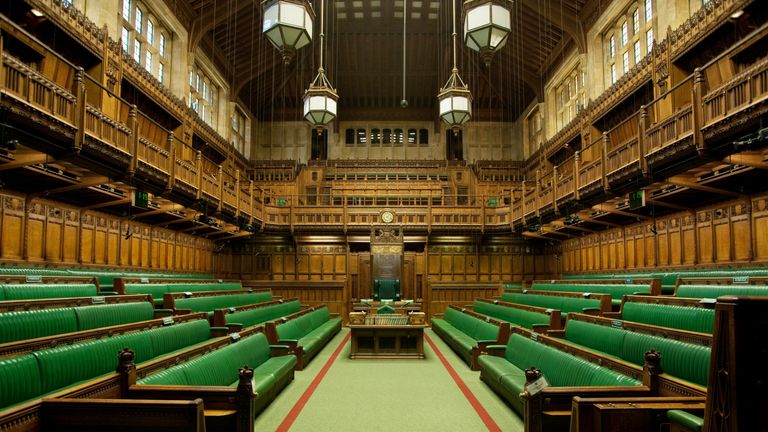
Yesterday the Conservative Party pulled out of the “Blurple” coalition , collapsing the government. As Britain finds itself without a functional government many wonder what’s next in store for the United Kingdom as no clear replacement for the government seems to exist. In this aticle Telegraph’s Harry Johnson looks at the potential outcomes of the current coalition period.

Scenario one Labour-LD minority with support from minor parties

Perhaps the most likely of all scenarios as of the time of writing this article. The hypothetical government would find itself with 38 out of 100 seats alongside an additional 8 seats from potential allies including The Progressive Party , The People’s movement , Solidarity and 2 former DRF MPs who are currently a part of the Official opposition. The policies of such a government are difficult to predict as it would lack a majority in the House of Commons and thus it is highly likely it would have to compromise. A potential sticking point for such an administration could be securing a viable Brexit deal within just weeks of the deadline,unless it chose to continue the work of the current International Trade Secretary. A decision that my prove itself quite controversial with the members of both parties ,both of which have traditionally favoured a softer Brexit. It is however worth noting that the Conservative Party has declared its willingness to assist such a government on the issue of brexit.Moreover an even bigger headache for this government could be the passage of a budget as unless a Clegg-esque budget deal can be struck with the Tory party , a left-wing budget is doomed to fail.
All in all , while such a government would have a hard time getting anything done it appears to be the most likely option of potential coalitions.
Scenario two Conservative Minority / Clegg Coalition

While the Conservatives have publicly ruled out entering a government as of today. It perhaps still might be worth examining the possibility of such a government ,given the volatile situation in Westminster. A government consisting solely out of Conservative and UUP MPs would control roughly a third of seats in the House of Commons and could potentially count on the support of either liberal democrats or Libertarians in order to pass legislation and stave off any potential challenges from the Official opposition.

A potentially different scenario could perhaps be some deeper form of Conservative-LD cooperation , perhaps a return of the Clegg government. The Telegraph expects such a government to play out in a similar fashion to a Conservative minority albeit with more moderate policies and a far stronger position relative to the Opposition Parties.
In terms of policy one could expect a Conservative minority to pursue flagship Conservative policies such as reforms to the provision of childcare , increased defence spending and reforms to land value taxation. In other words it could be expected that a potential Conservative minority would pursue similar policies to those of the previous Conservative minority. A more interesting situation may occur on the benches opposite as both the Libertarian and labour Parties would be in contention for control of Millbank Tower under a Conservative minority scenario. It is however worth stressing that as of the writing of this article the Conservative have ruled out a return to goverment and thus it’s difficult to speculate about any particular details of such an arragement.
Scenario three Libertarian-lead minority

One of the less predictable of the 4 potential scenarios laid out here , an LPUK minority government could count on 23 out of 100 seats within the House of Commons , with potential support from the Conservatives. A Libertarian only government would likely find itself in a difficult situation ,given it’s relatively small numbers. In fact an LPUK only minority government would be smaller than even the Liberal Alliance government , making it the smallest of all post-simulated polling governments. However a Libertarian government would have the advantage of being a single-party government and could most if not all existing blurple policies ensuring a continuity of power. The probability of such a government is quite low however as the current Opposition consisting of former DRF MPs and the Labour is one seat larger than a libertarian minority and thus we believe that a sole Libertarian government is unlikely.
A Libertarian-lead government with a junior coalition partner may have a better chance. As of today however the Telegraph is unaware of any such potential partners.
Whichever of the 3 governments forms , none of them will possess a majority in the House of Commons and thus will be considered minority governments.The success of a minority government therefore hinges upon the cooperation with other parties in the House of Commons , which with the current parliamentary arithmetic appears difficult at best and nigh impossible at worst.
Perhaps a completely different scenario in this situation could be an early General Election. Such a scenario seems unlikely though as none of the major parties except the Libertarians would stand to gain from a snap election. Even if an election did occur and seats switched hands it is likely that Parliament would be even more fractured ,owing to new parties on both the left and right entering parliament.
Another potential wildcard could be the composition of the House of Lords ,which as of today heavily favours the British left with the outgoing goverment having 12 peers to the Opposition’s 8 alongisde some 27 members of the Unofficial Opposition. While these numbers are meaningless in regards to coalition fomration , a potentially hostile house of lords could spell the disaster for any of the centre-right goverments and could make life easier for LAB-LD.
No matter the outcome of the coalition formation however it is clear that British politics are more polarised than ever…




 Model Telegraph